A welcome to our new Iranian students

This is one of the armchairs in my office.

Dozens of students, PhDs, post-docs come to sit here every week for hours of meetings.

Just now, that armchair had the privilege to host an Iranian student with whom I exchanged many emails in the past months. This person finally made it here, to study in our Master’s, despite everything, despite airport and internet closures, despite the violence of the regime governing their country, despite our own Embassy refusing to book appointments for students we have already selected through laborious procedures and online colloquia.

It is true that an armchair is just an armchair, this one a cheap trick bought for £15 in a charity shop in Cardiff a decade ago. But today I’m really glad it got to offer a seat to my new Iranian friend. I hope it will be able to host many more in the coming weeks and years.

Idea(l)s of home disentangled – A podcast

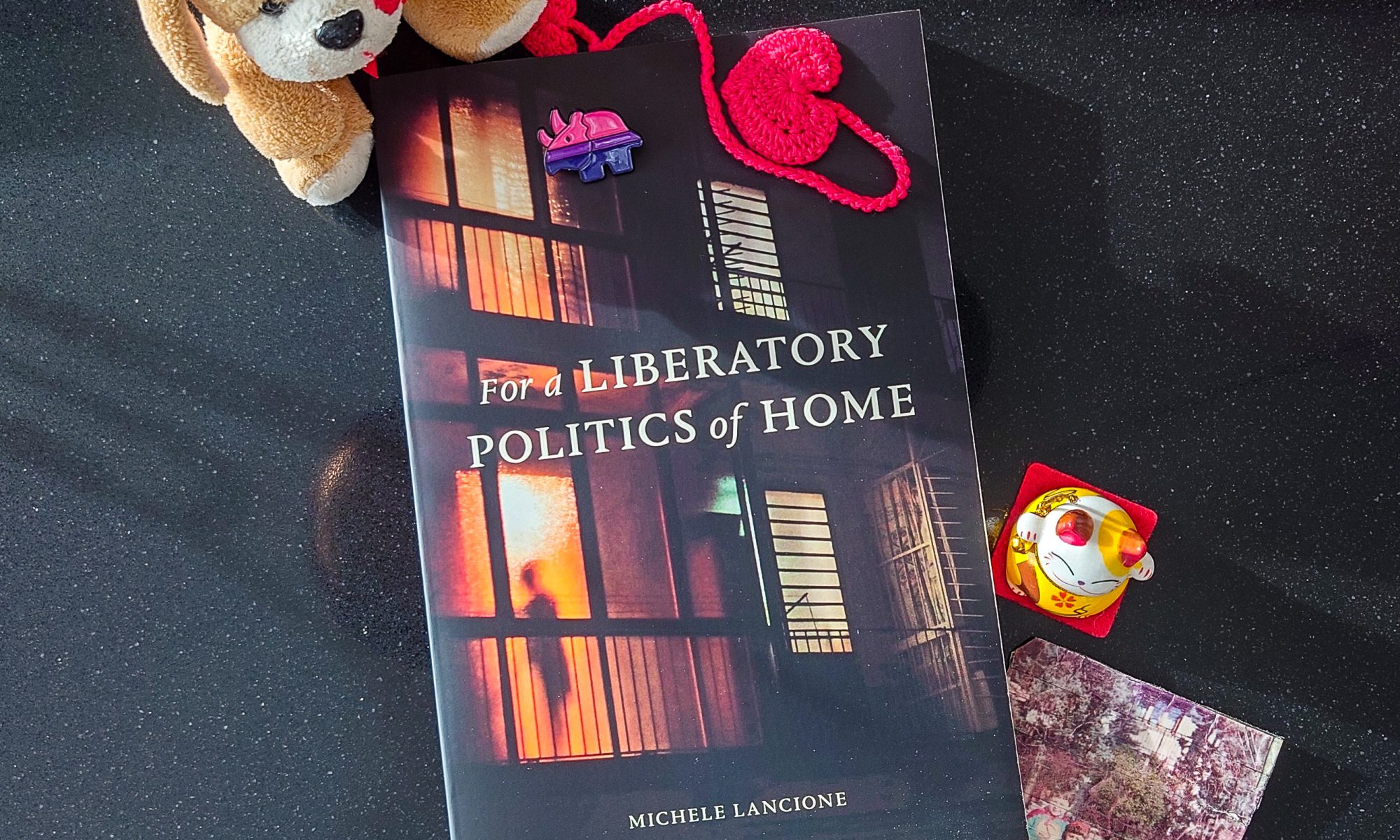
In this podcast episode, Eva Korte (PhD candidate, TU Berlin), Judith Keller (postdoctoral researcher, HU Berlin), and Khushboo Jain (PhD candidate, FAU Nürnberg-Erlangen) are in conversation with me, exploring my idea of a “liberatory politics of home,” which I outlined in my latest book.

The episode was recorded as part of a workshop on different ideas and ideal of home, which explored the spatial politics and practices surrounding home research. Reflecting on the intricacies and the emotional labor involved in doing home research, the conversation helps to work through and reflect on issues such as research practice, fieldwork, positionality, and the political implications of our work.

You can find the podcast here: https://sfb1265.de/einblicke/space-oddity/#space-oddity-28-ideals-of-home-disentangled

Beyond Inhabitation Lab: towards the next five years

Since its founding, the Beyond Inhabitation Lab has provided an infrastructure for collective study of the changing terrains and politics of inhabitation around the world. Our work has been organized around one guiding question: How are urbanites re-doing inhabitation through mundane struggles against historic and contemporary forms of dispossession?

We pursued this question across a set of intersecting initiatives:

1. Collective work with our steering committee

We sustained extended online conversations, seminars, and events with the steady intellectual engagement of our steering committee. Committee members have driven much of the Lab’s activity through situated inquiries and collaborative work. The committee included Asha Best, Cristina Cielo, Aïcha Diallo, Margherita Grazioli, Rupali Gupte, Wangui Kimari, Erin McElRoy, Alana Osbourne, Irene Peano, and Emma Shaw Crane.

2. International events, summer schools, and seminar series

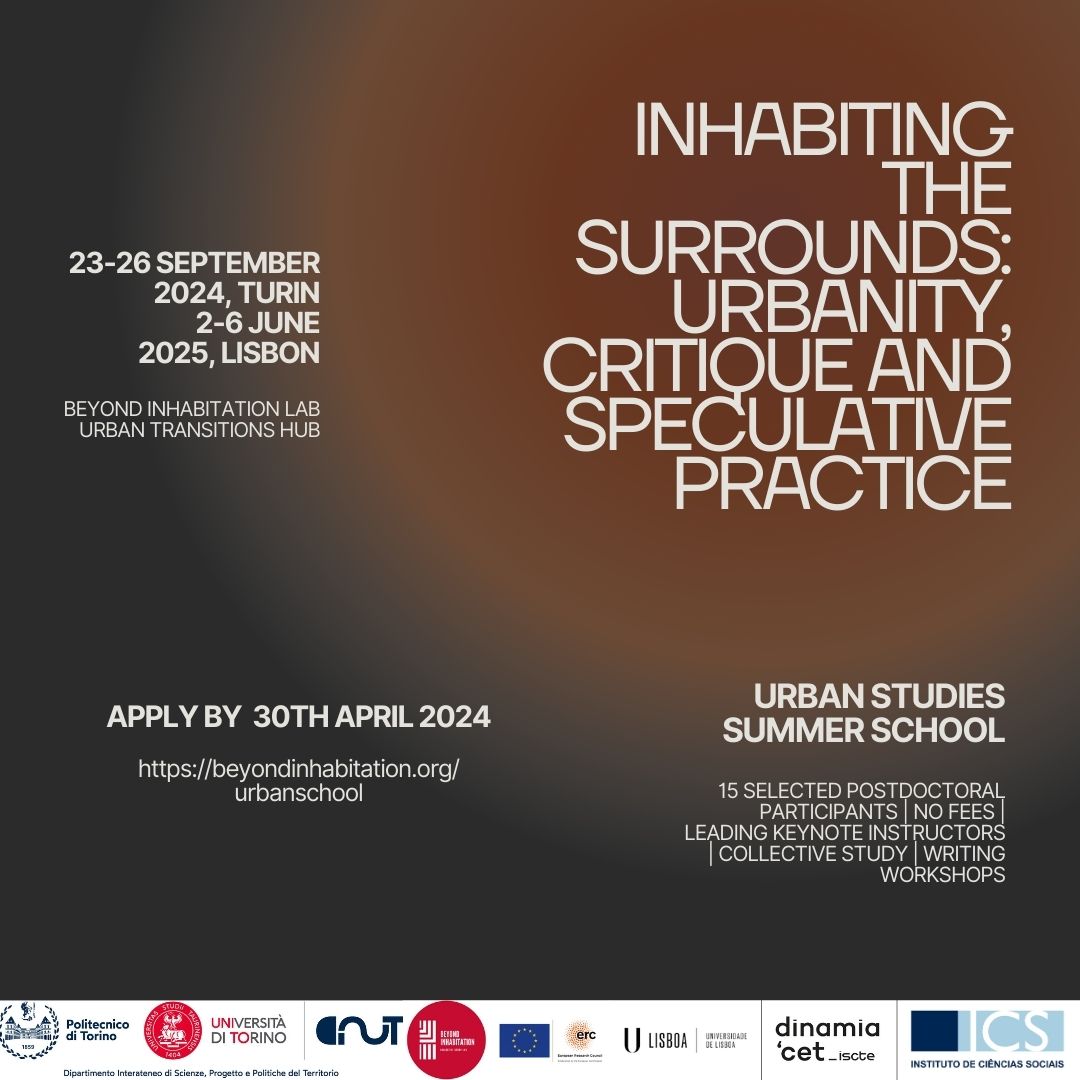
Over the past five years the Lab organized numerous international events, including two intensive summer programs (Turin and Lisbon, in partnership with the Urban Transitions Hub) that brought together 15 international fellows and featured keynotes by Gilmore, Thieme, Osbourne, de Boeck, Alves, and Simone. A Manifesto emerging from the Schools will appear in the journal City in early 2026. We also convened an extended collaborative workshop with ULIP in Paris, a two-day academic workshop with the Urban Institute in Sheffield, and delivered 25 public lectures by distinguished international scholars both in Turin and online. Many seminars have been recorded and are freely available on our YouTube channel: https://www.youtube.com/@beyondinhabitationlab762/videos. All public-facing events are listed on the Lab’s website.

3. ERC “Inhabiting Radical Housing” project

The Lab’s work in its first five years was funded by the ERC project Inhabiting Radical Housing, led by Michele Lancione. The project explored how housing and inhabitation struggles intersect with—and co-constitute—broader fights against class, racial, and gender injustice globally. It advanced a housing-justice research approach grounded in three tenets: a decolonial and intersectional theorization, ethnography oriented to situated engagement, and a committed approach to knowledge exchange. Project team members were also the Lab’s core researchers and central to its development: Chiara Cacciotti, Rodrigo Castriota, Mara Ferreri, Daniela Morpurgo, Oluwafemi Olajide, Veda Popovici, Rayna Rusenko, Ana Vilenica, and Devra Waldman. The Lab also hosted fellows through international fellowships, including Melissa García-Lamarca, Daniela Giudici, Chiara Iacovone, and Syeda Jenifa Zahan.

The published works emerging from the ERC programme of work are available here: https://beyondinhabitation.org/publications

Moving on

This five-year cycle initiated in 2019-2020 at the University of Sheffield with a series of workshops on the theme of “Dwelling in Liminalities” (see our positioning paper in EPD) and virtually closes with the forthcoming publication of our joint monograph “Beyond Inhabitation: Housing and Ordinary Desire at the Edge” (forthcoming fall 2026, Duke University Press).

We extend our thanks to the ERC postdoctoral fellows, steering committee members, and Turin-based scholars who have invested time and energy to populate the Lab with ideas, debates, and projects. A special thanks to everyone who participated in our events and seminars.

In January 2026 we will launch a thematic program for the next five years focused on Mediterranean geographies, where we will further unpack habitability, urbanity, racial politics, and speculative imaginaries. At this crucial juncture—marked by colonial and genocidal wars, the establishment of fascist biopolitics, and increasing attacks on critical academic inquiry—we renew our commitment to making the Lab an infrastructure for unapologetically political and conceptual work.

Stay tuned for more by subscribing to our mailing list or by following us on social media.

Michele Lancione and AbdouMaliq Simone

Against the law decree equiparating any critique to Israel with anti-semitism, an appeal

In Italy, there are several bills that aim to introduce the IHRA’s operational definition of antisemitism, i.e. the International Holocaust Remembrance Alliance.

Although they refer to the fight against antisemitism, these bills trivialise it and equate it with the expression of critical opinions towards the Israeli state’s occupation policies. These policies have been recognised as illegal and racially discriminatory by the Advisory Opinion of the International Court of Justice in July 2024, and as forms of apartheid by the most important Palestinian, Israeli and international organisations working in defence of human rights. As demonstrated by these same organisations and numerous United Nations reports, the policies implemented by the State of Israel have accelerated over the last two years and have resulted in forms of genocidal violence against the Palestinian people.

With a number of academics around the peninsula, today we have started an appeal to block these bills. They have nothing to do with anti-semitism, and they are just there to undermine our capacity to contest the genocidal project of the State of Israel in Palestine.

If you work in Italian academia – or perhaps you are visiting – consider signing our petition: https://docs.google.com/document/d/1YyUjMyjVoZc5aZ23fUyoCKVLsZswkCgrMO2F83eihV8/edit?tab=t.0

Come and study in our Master’s in Geography and Territorial Sciences in Turin

Join our Master’s degree in Geography and Territorial Sciences in Turin!

The programme, which I now direct, is taught by critical scholars of international standing. We offer pathways in Italian and an exciting English‑taught curriculum in Urban and Political Geography, covering crucial topics such as migration, housing justice, gender and race, geopolitics, planetary urbanisation, and rising injustice and poverty. The programme also includes courses in geo‑data science (including GIS) and physical geography.

Special merit‑based scholarships for international students are available only in the current application window, which closes on 29 January 2026.

Please help me share this information with your international students. You can find more info on our website and in the brochure below. Thank you!

PhD seminar at UniCal – home and anti-militarism

Last week I spent some time at the University of Calabria, near Cosenza. I had a wonderful experience thanks to my real generous host, Carmelo Buscema. The level of debate was quite amazing, and the level of critical inquiry was also deep, honest and generous.

I also had the privilege of spending some time with my friend Antonio Mazzeo – one of the few in Italy who has spent real energy and time in investigating the relationships between the military and our Schools and Universities.

Below, some random pictures from the sea at Paola, near Cosenza.

Save the Skid-Row Los Angeles Poverty Department!

The Los Angeles Poverty Department is facing serious financial troubles due to the draconian federal funding cuts imposed by the US government. Please join me in helping them and their mission: https://www.lapovertydept.org/donate/

I have been to them in Skid Row a number of times. To join their activities, to understand their practice and to do archival work. John Malpede and Henriëtte Brouwers’ work, together with their colleagues at the Skid Row History Museum and Archive is absolutely fundamental to maintain and nurture the rich history of arts and struggles in Skid Row.

Their work speaks of anti-racist housing justice organising and much more. Please help save this crucial community infrastructure — Skid Row needs this more than ever.

Free Mohamed Shahin!

We, the lecturers and researchers of Italian universities, express our deep concern about the situation of Mohamed Shahin, imam of the Omar Ibn al-Khattab mosque in Turin, currently detained at the Caltanissetta Repatriation Centre following an expulsion order issued by the Ministry of the Interior.

Mohamed’s offence? Speaking for Palestine. Sign our petition: https://docs.google.com/forms/d/e/1FAIpQLScS7NW8AOBCa-uCPe1XnsNknvE5qa_jMuRmmonfPAVEDtkprA/viewform — which I am providing with an automated English translation below.

APPEAL BY UNIVERSITY LECTURERS AND RESEARCHERS FOR THE RELEASE OF MOHAMED SHAHIN


We, the lecturers and researchers of Italian universities, express our deep concern about the situation of Mohamed Shahin, imam of the Omar Ibn al-Khattab mosque in Turin, currently detained at the Caltanissetta Repatriation Centre following an expulsion order issued by the Ministry of the Interior.

The revocation of his long-term residence permit and the consequent risk of forced repatriation to Egypt raise serious questions about respect for fundamental human rights. It is well known that, prior to his arrival in Italy more than twenty years ago, Mr Shahin was considered a political opponent of the Egyptian regime. The prospect of his forced return to Egypt would expose him to a real risk of persecution, arbitrary detention and inhuman treatment.

The reasons behind the revocation of his permit appear to be linked to his public statements on the situation in Gaza and his critical stance on the actions of the Israeli government. If this is the case, we would be faced with an extremely worrying precedent: the use of administrative instruments to target the exercise of freedom of opinion, which is protected by Article 21 of the Constitution and by international conventions to which Italy is a party.

Similar cases in recent years confirm a trend towards sanctioning foreign citizens for their political opinions or expressions of solidarity with the Palestinian people. The use of CPRs in this context risks becoming a form of indirect repression of dissent and arbitrary limitation of democratic space.

It is important to remember that Mohamed Shahin has long been involved in interfaith dialogue and social cooperation. Numerous religious communities, civic associations and interfaith groups have publicly attested to his contribution to building peaceful relations between different components of the city of Turin, highlighting the collaborative and open nature of his work. In particular, the Turin Christian-Islamic Dialogue Network, in a statement addressed to the President of the Republic and the Minister of the Interior, highlighted Mohamed Shahin’s central role in interfaith dialogue and community life in the San Salvario neighbourhood.

In light of all this, we believe that immediate action is essential to ensure full compliance with constitutional principles, the Geneva Convention and Italy’s international obligations regarding human rights and protection against refoulement.

We therefore call for:

The immediate release of Mohamed Shahin and the suspension of the execution of the expulsion decree.

The review of the decision to revoke Mohamed Shahin’s residence permit, ensuring an impartial examination in accordance with national and international legal standards.

The protection of the right to freedom of expression in academic, cultural and religious contexts, regardless of the origin or faith of the individuals involved.

The closure of CPRs, places where human rights are violated.

As lecturers and researchers, we recognise the civic responsibility of the university to defend democratic values, promote pluralism and oppose all forms of discrimination or unlawful restriction of fundamental freedoms.

Two new reviews of For a Lib Politics of Home by Vradis and Avecedo-Guerrero in City

Thank you to Antonis Vradis and Tatiana Acevedo Guerrero — two comrades and scholars whose work I admire deeply — for their generous reviews of mine “For a Liberatory Politics of Home” in City – Analysis of Urban Change, Theory, Action Duke

Thanks also to Sam Burgum for the curation!

Antonis: https://www.tandfonline.com/doi/full/10.1080/13604813.2025.2574135

Tatiana: https://www.tandfonline.com/doi/full/10.1080/13604813.2025.2574136

Frontex and the University: new co-authored paper in Antipode

Our collective study on the relationship between Frontex and the university is now out, open access in Antipode (https://onlinelibrary.wiley.com/doi/10.1111/anti.70090).

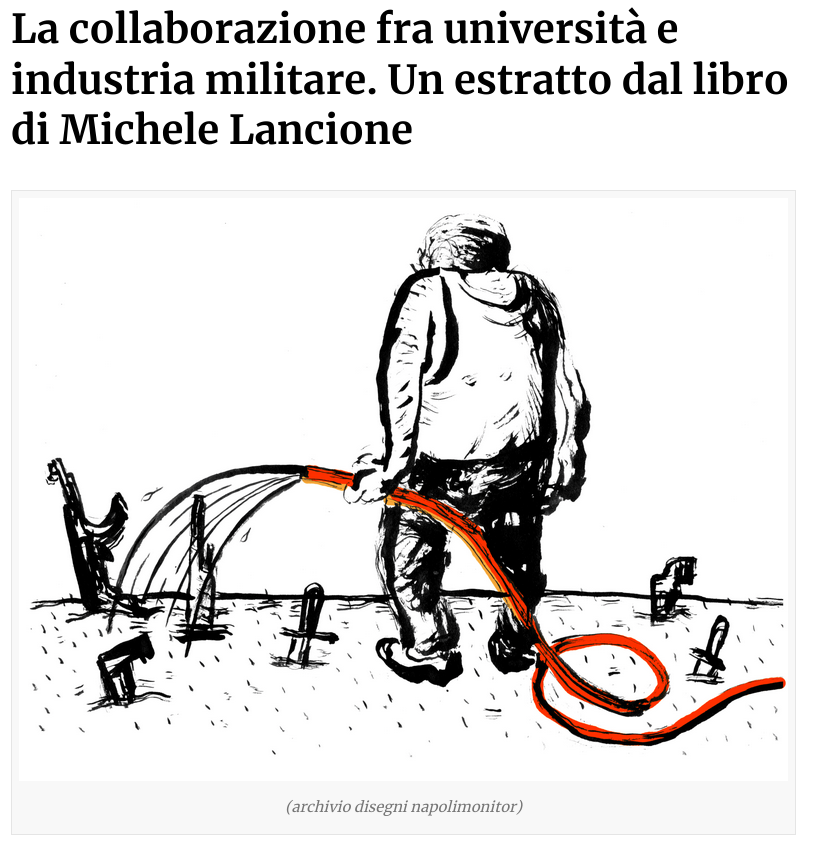
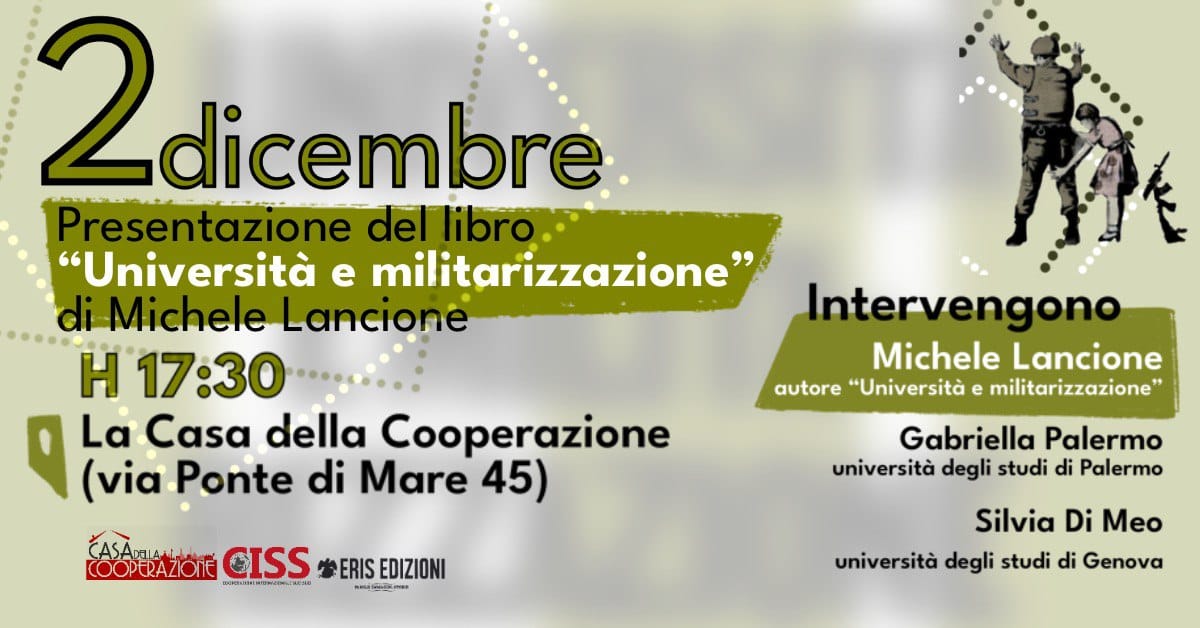
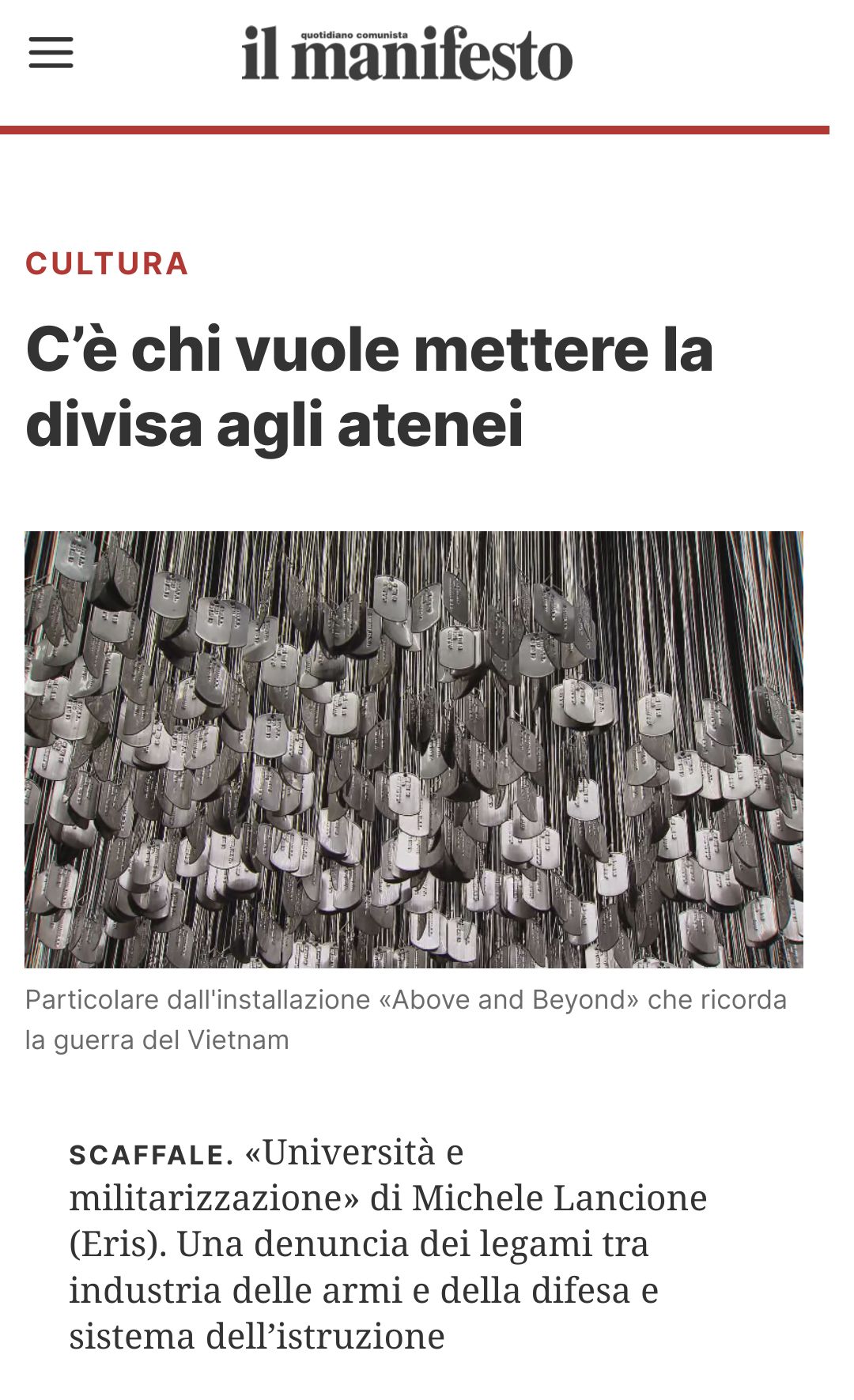
This article is just one part of a longer story. In 2021 we carried out direct actions, investigations and protests challenging the ties between my department at Polito and Frontex — thanks to the efforts of many students and collectives across Italy and the reporting of journalist Luca Rondi (see here for a recap: https://www.michelelancione.eu/blog/2022/11/10/the-university-of-turin-against-frontex-and-against-the-polytechnic-the-fight-continues/). In 2022 and 2023 I focused on tracing Frontex’s links with the military-industrial complex (see Università e militarizzazione, Eris Edizioni: https://www.erisedizioni.org/prodotto/universita-e-militarizzazione/). The work with student collectives throughout Italy that followed — and continues — has been vital.

With my co-authors, Giulia Corgnier, Patrícia Nunes Gomes and Devra Waldman we decided to take a step back and probe more deeply into Frontex because the coloniality and violence of Western academia demand further challenge.

We hope our research will be useful to those fighting the academic-military-industrial complex in Europe and beyond.

Frontex and the University: Positivist Dissonance and the Institutionalisation of Border Violence through Research

The paper examines the existing relationships between universities and Frontex, investigating and problematising the intersection between the higher education sector and the violence of the European border regime. We introduce the concept of positivist dissonance to conceptualise these relationships within the wider “industrial-military-academic complex”. Several cases are examined, ranging from the Horizon projects involving both universities and Frontex to the research grants offered by the agency and its teaching programmes. We also discuss the case of our department at the Polytechnic of Turin, which has provided cartographic services to Frontex. The paper offers a twofold contribution. First, expanding on available scholarship, it shows how universities function as key actors in the enforcement of regimes of border control. Second, it provides conceptual and empirical insights to centre academia as a prime ground not only of critical thinking but also of direct struggle against the violence of the EU border regime.